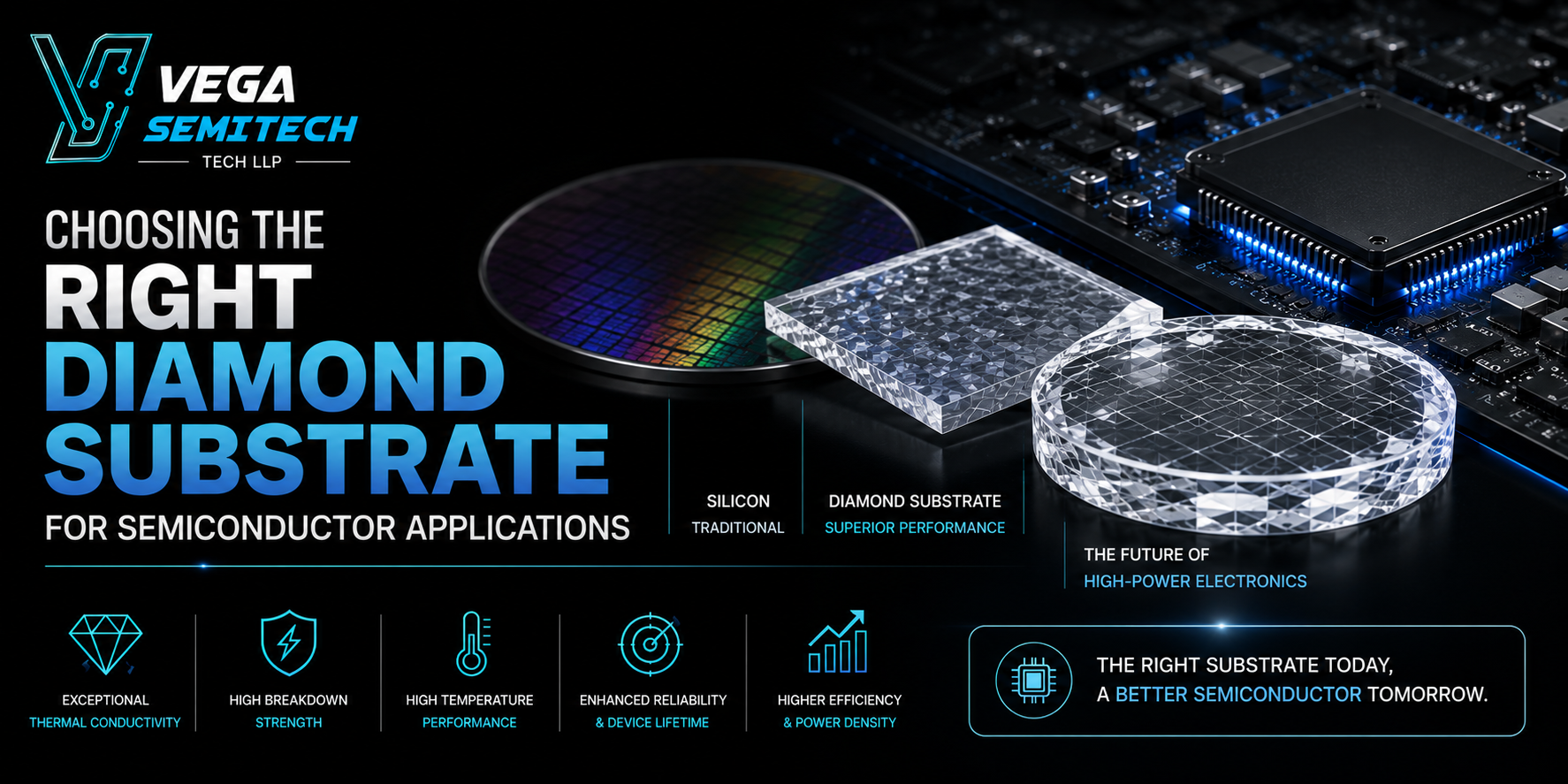
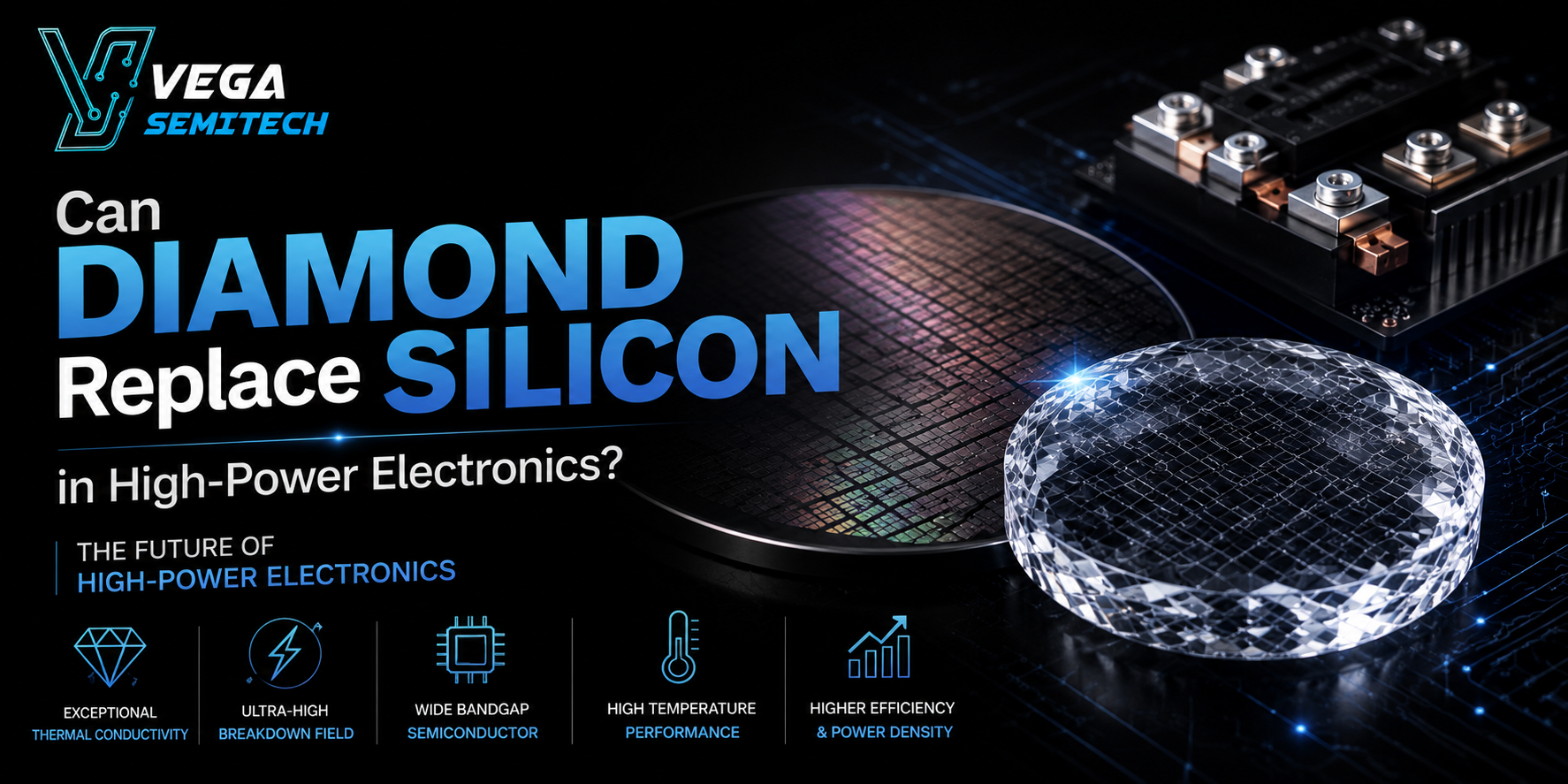
The semiconductor industry is moving toward smaller devices, higher power densities, faster switching speeds, and increasingly demanding operating conditions. As semiconductor components become more powerful, managing the heat generated during operation has become one of the most important challenges in electronic design. Conventional thermal management materials can reach their practical limits when devices operate at high power or within extremely compact packages.
CVD diamond substrates have emerged as an advanced solution for these demanding applications. With exceptional thermal conductivity, high mechanical strength, chemical stability, and excellent thermal spreading capability, diamond can help semiconductor manufacturers improve device reliability and thermal performance. However, not every diamond substrate is suitable for every application. Selecting the right substrate requires careful consideration of material quality, thermal requirements, dimensions, surface finish, and integration conditions.
What is a Diamond Substrate?
A diamond substrate is a specially manufactured plate or layer of synthetic diamond used as a foundation, heat spreader, or thermal management component within electronic and semiconductor systems. For advanced applications, CVD (Chemical Vapor Deposition) technology enables manufacturers to produce diamond materials with controlled properties and dimensions.
Unlike diamond used for jewellery, semiconductor-grade diamond is engineered primarily for its functional properties. Its extremely high thermal conductivity allows heat to move rapidly away from active semiconductor regions, helping maintain a more stable operating temperature.
Why Diamond Substrate Selection Matters
Choosing an appropriate diamond substrate is not simply a matter of selecting the material with the highest thermal conductivity. The substrate must work effectively with the semiconductor device, packaging materials, thermal interface, and cooling architecture. A mismatch between these components can reduce the expected thermal performance or create mechanical stress.
The right substrate should therefore be selected based on the complete thermal and mechanical requirements of the application. This is particularly important for high-power electronics, RF systems, laser devices, aerospace electronics, and other applications where thermal reliability directly affects performance.
Key Factors for Choosing a Diamond Substrate
Thermal Conductivity
Thermal conductivity is one of the most important properties to evaluate. High-quality CVD diamond can provide thermal conductivity in the range of approximately 1,800–2,200 W/m·K, depending on the material grade and manufacturing process. Higher thermal conductivity can enable faster heat spreading and improved temperature control in high-power semiconductor applications.
However, the conductivity of the complete thermal path is also important. The interface between the semiconductor, diamond substrate, metallization, and cooling system can significantly influence actual device performance.
Diamond Quality and Purity
The quality of the CVD diamond has a direct influence on its thermal and mechanical performance. Factors such as crystal structure, impurities, defects, grain boundaries, and material uniformity should be considered when selecting a substrate for demanding semiconductor applications.
For high-performance applications, manufacturers should evaluate material specifications and quality-control data rather than selecting a substrate based only on nominal thermal conductivity.
Substrate Thickness
The thickness of a diamond substrate should be selected according to the application's thermal load, mechanical requirements, available package space, and overall thermal path. A thicker substrate may provide additional mechanical support, while a thinner substrate can help reduce package size and weight.
The objective is to achieve the required thermal and mechanical performance without adding unnecessary material or package thickness.
Surface Finish and Flatness
Surface quality is particularly important when the diamond substrate must be bonded directly to a semiconductor device or another thermal management component. Surface roughness, flatness, and polishing quality can influence contact resistance and bonding reliability.
A carefully controlled surface finish can help create a more effective thermal interface and improve the consistency of heat transfer across the contact area.
Thermal Expansion Compatibility
Thermal expansion compatibility is another critical consideration. Semiconductor devices and packaging materials can expand and contract differently as temperature changes. Repeated thermal cycling can create mechanical stress at interfaces when materials have significantly different coefficients of thermal expansion.
Diamond has a very low coefficient of thermal expansion, which can be advantageous in certain high-reliability applications. Engineers should nevertheless evaluate the complete material stack to ensure that the diamond substrate is compatible with the semiconductor and packaging architecture.
Metallization and Bonding Compatibility
CVD diamond is not normally used as a conventional semiconductor wafer in the same way as silicon. In many thermal management applications, the diamond surface is engineered or metallized so that it can be bonded to other components.
The selected metallization system should be compatible with the intended bonding technique, operating temperature, electrical requirements, and manufacturing process. Proper interface engineering is essential to take full advantage of diamond's thermal properties.
Selecting Diamond Substrates for Different Applications
High-Power Semiconductor Devices
High-power semiconductor devices require rapid heat removal from active regions. For these applications, priority should be given to high thermal conductivity, excellent surface quality, appropriate thickness, and reliable thermal interfaces. Diamond can act as a heat-spreading layer that moves heat away from concentrated sources and toward the cooling system.
RF and Microwave Electronics
RF and microwave power devices can generate significant localized heat while operating at high frequencies. A diamond substrate or heat spreader can help control device temperature and improve thermal stability, particularly in compact high-power systems.
Laser and Photonics Systems
High-power laser components are highly sensitive to temperature. Excessive heat can affect optical performance, wavelength stability, and component reliability. Diamond substrates are attractive in these systems because they combine high thermal conductivity with excellent optical and mechanical properties.
Power Electronics and Electric Vehicles
Power modules used in electric vehicles, renewable energy systems, industrial drives, and charging infrastructure must operate efficiently under demanding thermal conditions. Diamond-based thermal solutions can help manage heat generated by high-power switching devices and support compact package designs.
Important Specifications to Review
Before selecting a CVD diamond substrate, engineers should review the supplier's technical specifications and confirm that the material meets the requirements of the complete device assembly.
- Thermal conductivity and its measurement conditions.
- Diamond grade, purity, and crystal structure.
- Substrate dimensions, thickness, and tolerances.
- Surface roughness, flatness, and polishing quality.
- Thermal expansion and mechanical properties.
- Metallization and bonding compatibility.
- Operating temperature and environmental requirements.
- Manufacturing consistency and quality-control documentation.
Why CVD Diamond is Becoming Important in Semiconductor Technology
The increasing demand for artificial intelligence processors, high-performance computing, electric vehicles, advanced telecommunications, radar systems, and high-power electronics is creating new thermal challenges. More power is being concentrated into smaller semiconductor packages, leaving less physical space for conventional cooling solutions.
CVD diamond addresses this challenge by providing extremely efficient heat spreading in a compact form. Instead of relying entirely on larger heat sinks or increasingly complex cooling systems, engineers can integrate diamond closer to the heat-generating semiconductor region.
This approach can improve thermal performance while supporting smaller and more powerful electronic designs. It is particularly valuable where conventional copper or ceramic thermal solutions cannot provide sufficient heat spreading within the available package size.
Diamond Substrate vs Conventional Thermal Materials
Copper and other conventional materials remain widely used because they are relatively affordable, easy to process, and supported by mature manufacturing infrastructure. However, diamond provides a significant advantage in thermal conductivity and heat spreading capability.
The decision should therefore be based on the complete application rather than thermal conductivity alone. For a cost-sensitive, moderate-power application, conventional materials may remain the better choice. For highly compact systems where thermal performance is the primary limitation, the additional cost and complexity of CVD diamond may be justified.
How to Choose the Right Diamond Substrate Supplier
Selecting the right supplier is as important as selecting the substrate itself. Semiconductor applications require tight dimensional tolerances, consistent material quality, reliable surface finishing, and repeatable thermal properties.
A capable supplier should be able to provide detailed material specifications, quality documentation, dimensional tolerances, surface-finish information, and application-specific recommendations. Technical support during substrate design and integration can also help manufacturers reduce development time and avoid costly compatibility issues.
Conclusion
Choosing the right diamond substrate requires more than selecting the highest available thermal conductivity. Engineers must consider thermal performance, diamond quality, substrate thickness, surface finish, thermal expansion, bonding compatibility, dimensions, and the requirements of the complete semiconductor package.
CVD diamond offers an exceptional combination of thermal conductivity, mechanical strength, chemical stability, and heat-spreading capability, making it a valuable material for next-generation semiconductor thermal management. As electronic devices continue to become more powerful and compact, selecting the right diamond substrate can help manufacturers improve thermal performance, reliability, and overall device efficiency.